Veo 3 on deep-imager is for motion that should feel photographed, not illustrated.
Still first with text to image, then Veo 3 for camera and light.
What is Veo 3 best for on deep-imager?
Cinematic b-roll, product motion, and realistic scene previews.
Use a different model if you want stylized anime motion. Veo 3 is the photoreal lane.
When a still is close, prefer image to image to keep composition while you change lighting, background, or crop intent. Regenerating from a blank text to image prompt usually costs more exploratory credits.
Record what worked: model name, ratio, and the exact prompt line that survived review. That notebook becomes your reusable playbook across ecommerce, social, and concept batches.
On deep-imager, treat the AI image generator as a credit-aware studio: lock aspect ratio, pick the model, then write the prompt so text to image spends once on a usable frame.
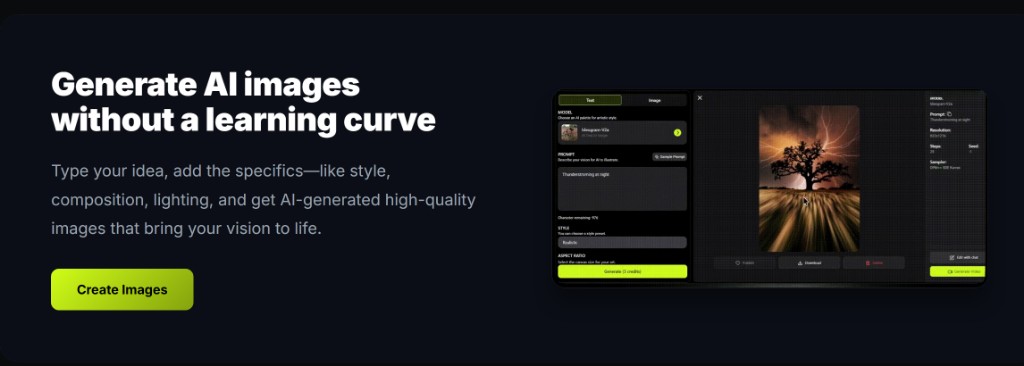
Should you storyboard with text to image first?
Yes — a still costs less to iterate than a clip, and image to image can lock framing.
Once the frame is right, switch to Veo 3 and add camera language: slow dolly, handheld, locked-off.
When a still is close, prefer image to image to keep composition while you change lighting, background, or crop intent. Regenerating from a blank text to image prompt usually costs more exploratory credits.
Record what worked: model name, ratio, and the exact prompt line that survived review. That notebook becomes your reusable playbook across ecommerce, social, and concept batches.
On deep-imager, treat the AI image generator as a credit-aware studio: lock aspect ratio, pick the model, then write the prompt so text to image spends once on a usable frame.
How do credits work for video vs stills?
Both draw from the same wallet: 5 free credits to start, then plans from $1/month.
Check how credits work for the current Veo 3 cost before a client preview.
When a still is close, prefer image to image to keep composition while you change lighting, background, or crop intent. Regenerating from a blank text to image prompt usually costs more exploratory credits.
Record what worked: model name, ratio, and the exact prompt line that survived review. That notebook becomes your reusable playbook across ecommerce, social, and concept batches.
On deep-imager, treat the AI image generator as a credit-aware studio: lock aspect ratio, pick the model, then write the prompt so text to image spends once on a usable frame.
- Draft stills first.
- One motion instruction per clip.
- Export MP4 when the queue completes.
Is image-to-video always on?
Check the model card in the AI image generator; support can differ by Veo version.
If image-to-video is listed, upload the still. If not, describe the scene in text and match the still by prompt.
When a still is close, prefer image to image to keep composition while you change lighting, background, or crop intent. Regenerating from a blank text to image prompt usually costs more exploratory credits.
Record what worked: model name, ratio, and the exact prompt line that survived review. That notebook becomes your reusable playbook across ecommerce, social, and concept batches.
On deep-imager, treat the AI image generator as a credit-aware studio: lock aspect ratio, pick the model, then write the prompt so text to image spends once on a usable frame.
How do you keep quality high without wasting credits?
Lock ratio first, run one strong text to image pass, then refine with image to image instead of endless fresh prompts.
Before you click Generate, confirm the credit cost on the button and the aspect ratio for the channel you will actually publish to.
If the model returns a safety or policy error, rewrite the prompt without protected names or sensitive requests rather than retrying the same blocked wording.
For team handoff, save the winner still and the prompt in your dashboard history so the next editor can Make Same or continue with image to image.
On deep-imager, treat the AI image generator as a credit-aware studio: lock aspect ratio, pick the model, then write the prompt so text to image spends once on a usable frame.
Start in text to image or image to image, pick a model such as GPT-4o image, then check pricing from $1/month and how credits work before a long run.